

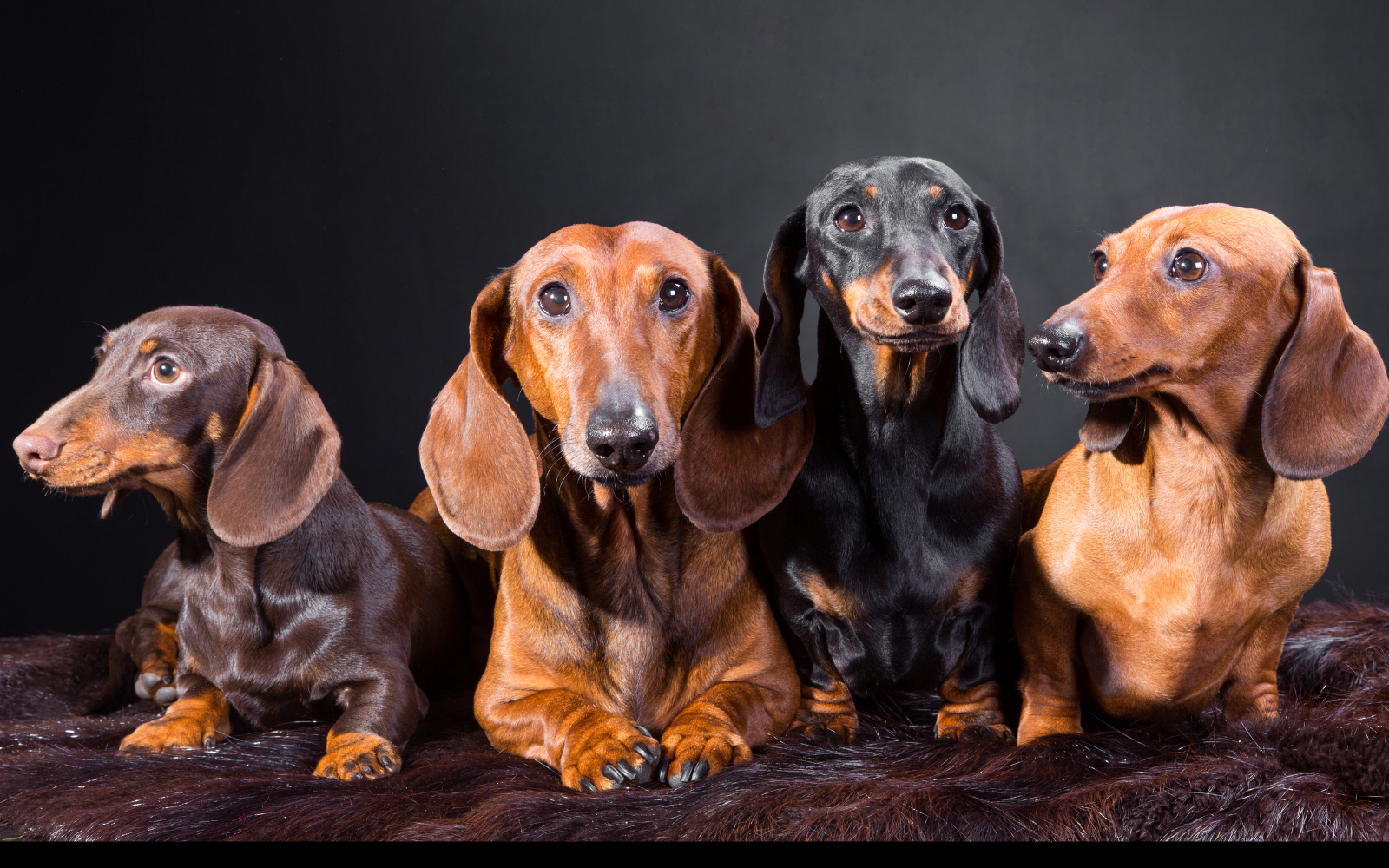
Smooth-coated dachshunds consistently showed poorer spinal health than long- and wire-coated varieties in a major international study involving more than 4,000 dogs.
The research examined data from dachshunds in the UK, Norway and Denmark and found a similar pattern across all three populations, despite the researchers using different measures of spinal health.
Smooth-coated dogs generally recorded the poorest results, while wire-coated dachshunds showed the best spinal health and long-haired dogs fell between the two groups. Small smooth-coated varieties, including miniature and kaninchen dachshunds, were among those with the poorest outcomes.
The findings raise the possibility that genes associated with different coat types could also influence susceptibility to intervertebral disc disease, commonly known as IVDD.
However, the researchers have not concluded that a smooth coat directly causes spinal disease. The study identifies an association and proposes possible genetic explanations that will require further investigation.
More than 4,000 dachshunds studied
The retrospective study included 4,295 dachshunds from three European countries.
In the UK population, spinal health was assessed using owner-reported cases of symptomatic IVDD. In Norway and Denmark, researchers used spinal X-rays to measure the number of calcified intervertebral discs.
Disc calcification is associated with degeneration of the intervertebral discs and is used in dachshund spinal screening programmes as an indicator of future IVDD risk.
Despite the differences in how spinal health was measured, the same broad pattern was seen in each country: smooth-coated dachshunds had poorer spinal health than long- and wire-coated dogs.
The consistency of the findings across separate populations strengthens the evidence that the differences between coat varieties warrant further study.
Could coat-related genes influence IVDD risk?
The researchers suggest that the genetic variants responsible for coat characteristics may also affect biological processes involved in maintaining healthy intervertebral discs.
One gene discussed in the paper is RSPO2, which is associated with the distinctive furnishings seen in wire-coated dogs, including their eyebrows and facial hair.
RSPO2 is involved in the Wnt/β-catenin signalling pathway. This pathway plays a role in the development and maintenance of tissues including cartilage and intervertebral discs.
The authors propose that increased activity within this pathway could potentially have a protective effect on spinal health in wire-coated dachshunds.
The paper also discusses FGF5, a gene associated with hair length, as another possible contributor to the differences observed between smooth- and long-coated dogs.
These explanations remain hypotheses. The study did not demonstrate that either RSPO2 or FGF5 directly causes or prevents IVDD.
It is also possible that other genes inherited alongside the coat variants, differences in the historical development of the varieties, or wider genetic diversity may contribute to the results.
IVDD is unlikely to be explained by one gene
Dachshunds are strongly predisposed to early degeneration of the intervertebral discs. Much of the genetic discussion surrounding this risk has focused on the FGF4L2 retrogene, which is associated with chondrodystrophy and premature disc degeneration.
However, FGF4L2 is extremely common within the dachshund population, while not every dog develops symptomatic IVDD.
The new findings support the view that IVDD is a polygenic and multifactorial condition. This means susceptibility is likely to be influenced by several genes, potentially combined with environmental and lifestyle factors, rather than being determined by one genetic variant alone.
Coat-related genes could be among the factors that modify the underlying risk, but further genomic and experimental research will be needed to establish whether they are directly responsible for the differences identified.
What do the findings mean for dachshund guardians?
The study does not mean that every smooth-coated dachshund will develop IVDD or that wire-coated dogs are protected from the condition.
It reports differences in average spinal health across large groups of dogs. Individual risk can still vary significantly within each coat and size variety.
A smooth-coated dachshund with a strong family history of good spinal health may have a different level of risk from another smooth-coated dog. Equally, long- and wire-coated dachshunds can still develop serious disc disease.
The findings should therefore not be used in isolation when choosing a puppy or making breeding decisions.
Family history, spinal screening results and the wider genetic health of breeding lines remain important considerations. Breeders will also need clear guidance before incorporating any new genetic findings into selection programmes.
Why the study matters
Differences in IVDD prevalence between dachshund varieties have been reported previously, with smooth-coated dogs often appearing to be more affected.
This study adds weight to those observations by identifying a consistent pattern among thousands of dogs in three countries and across two different measures of spinal health.
Its most significant contribution may be the suggestion that genes associated with coat type could act as modifiers of IVDD susceptibility.
The research does not yet provide a new genetic test or a simple way to predict which individual dogs will develop the condition. It does, however, offer scientists a clearer direction for future work into why some dachshunds are more severely affected than others.
Frequently asked questions
What is IVDD?
Intervertebral disc disease is a condition in which one or more of the discs between the vertebrae degenerate. A damaged disc may herniate and place pressure on the spinal cord, potentially causing pain, weakness, loss of coordination or paralysis.
Does the study prove that smooth coats cause IVDD?
No. It found an association between coat variety and spinal health but did not prove that the coat, or a particular coat gene, directly causes IVDD.
Which dachshunds showed the poorest spinal health?
Smooth-coated dachshunds consistently showed poorer spinal health than long- and wire-coated dogs. Small smooth-coated varieties generally recorded some of the poorest results.
Were wire-coated dachshunds free from IVDD?
No. Wire-coated dogs showed better spinal health on average within the study populations, but they can still develop IVDD.
How was spinal health measured?
The UK data used owner-reported symptomatic IVDD. The Norwegian and Danish populations were assessed using X-rays that recorded the number of calcified intervertebral discs.
Why are calcified discs important?
Disc calcification is evidence of intervertebral disc degeneration. Dachshunds with higher numbers of calcified discs are considered to have a greater risk of developing clinical disc disease.
Does this change current advice for breeders?
The study provides an important direction for further research, but it does not establish a new breeding test or prove that dogs should be selected according to coat type. Breeding decisions should consider family history, available spinal screening and wider
Want to learn more about raising a healthy dachshund?
If you share your life with a dachshund, understanding the breed’s unique needs is one of the best ways to support their long-term health and wellbeing. In The Yappy Hour podcast, host Nathan Dunleavy is joined by licensed breeder and dachshund specialist Nicky Hammel to discuss everything from puppyhood and behaviour to responsible breeding, IVDD, PRA and what makes dachshunds such a unique breed.
Listen here: —-> Raising happy dachshunds, a heart-to-heart with sausage dog specialist Nicky Hammel
Add a comment