

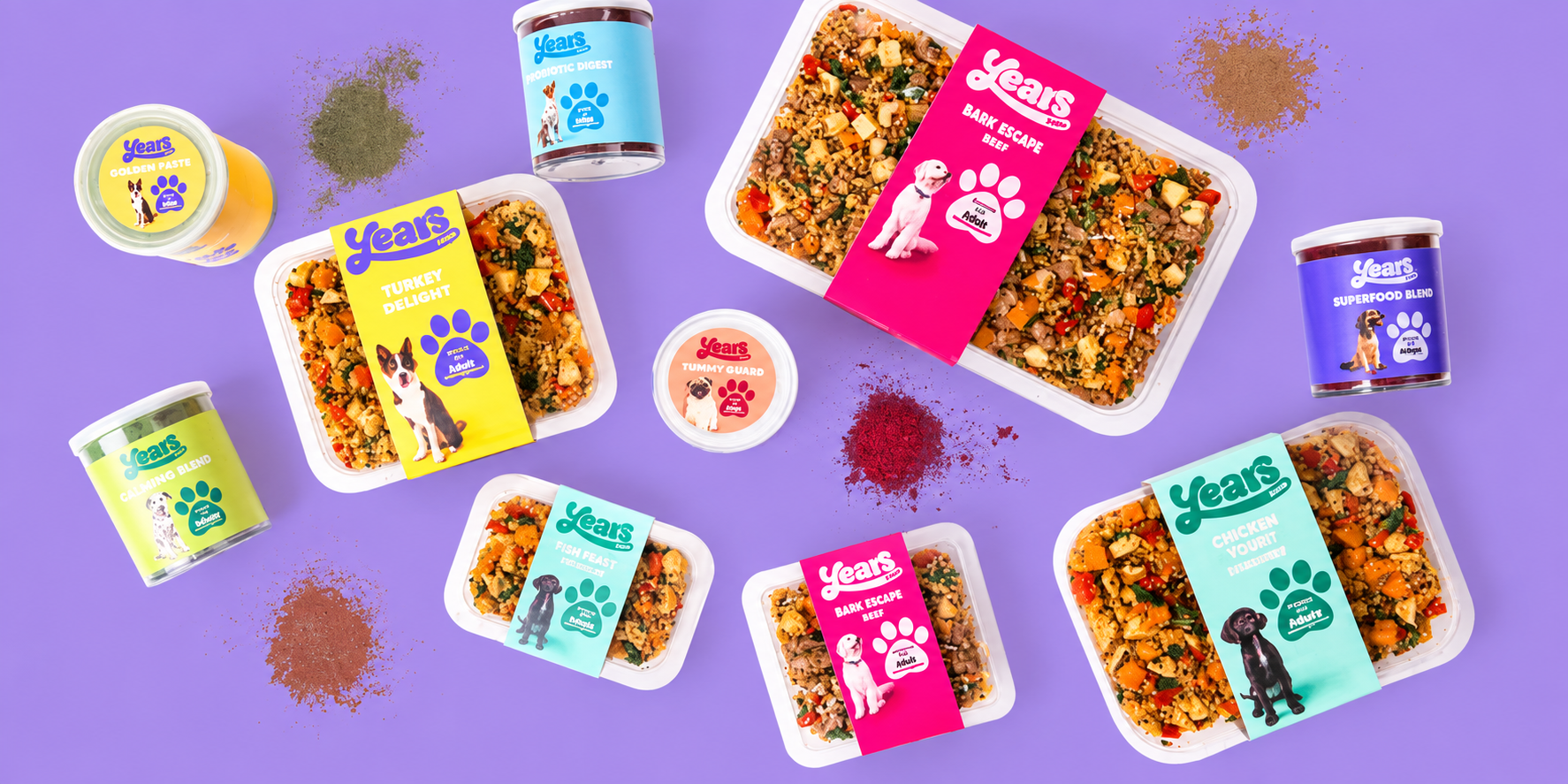
Years says it will resume supplying its fresh dog food in October after an extensive investigation found no evidence of contamination, toxins or safety issues with its meals. However, the company is removing buckwheat from all recipes as a precaution while the wider investigation into cases of sudden bilateral dry eye continues.
Fresh dog food company Years has published the findings of its investigation following the voluntary recall of its meals on 17 August 2026.
The recall followed reports of dogs developing sudden bilateral keratoconjunctivitis sicca (KCS), an acute and potentially serious form of dry eye affecting both eyes.
Years began investigating on 22 July after receiving 11 reports of potential sudden bilateral dry eye. By the time the precautionary recall was issued on 17 August, the company says that figure had risen to 57 potential cases.
Now, after weeks of investigation and extensive laboratory testing, Years says it has found no evidence of contamination, toxins, food-safety problems, packaging migration or manufacturing issues with its food.
But the underlying cause of the unusual pattern of sudden bilateral dry-eye cases remains unknown.
More than 21,000 test results
According to Years, the investigation involved 21,757 individual test results covering 1,129 distinct substances.
Testing included individual ingredients, retained production meals and meals returned by customers. In total, the investigation covered 273 meals across all six recipes and 101 ingredient samples across 35 ingredients.
The company says testing looked for a wide range of possible explanations, including pesticides, veterinary medicines, sulphonamides, mycotoxins, microbiological contamination, tropane alkaloids, heavy metals, cleaning chemicals, nutritional issues, packaging migration and fagopyrin.
Years says no contamination, toxin or safety issue was identified and that no link between its food and the reported cases of sudden bilateral dry eye was found.
The company also commissioned reviews of its manufacturing, supplier and food-safety systems.
Years says the Food Standards Agency and Trading Standards have been kept informed throughout the investigation and have been provided with laboratory results, microbiological testing data and manufacturing records.
Years will restart deliveries in October
Following the investigation, Years says it will resume serving customers in October.
But its recipes are changing.
All Years recipes will now be buckwheat-free.
The company says customers had expressed a preference to return to its previous recipes and that removing buckwheat is also being done as a precaution.
Buckwheat had become a major focus of the investigation after the August recall.
What did the investigation find about buckwheat?
Years says every batch of buckwheat historically used in its food was tested.
The company reports testing its buckwheat for 940 distinct substances, including tropane alkaloids, mycotoxins, pesticides, heavy metals and fagopyrin.
No toxin, contamination or safety issue was identified, according to the investigation.
Years also says cases weren’t concentrated around a single buckwheat batch, cooking cycle or production batch.
However, buckwheat hasn’t disappeared from the wider investigation entirely.
Buckwheat also appears in some cases outside the UK
One of the more interesting findings in the report concerns dogs outside the Years customer population.
Years says dog foods containing buckwheat were present in the diets of a significant number of affected dogs reported in Finland and Hungary, where Years food isn’t sold.
The company says this appeared to be at a prevalence higher than buckwheat’s overall share of the market.
However, Years itself stresses that this is an observation and not proof that buckwheat is responsible for the condition.
There are currently no complete figures showing how many affected dogs in the three countries were not eating buckwheat.
Other possible contributing factors, including environmental exposure, seasonal variation and medication, also need to be considered.
Years says questions around whether buckwheat could trigger an individual sensitivity, adverse reaction or another biological pathway not yet understood will require further investigation by scientific experts and regulatory bodies.
155 cases identified in Years-fed dogs
The report also provides new information about the number of cases being investigated.
Independent case data provided by the British Association of Veterinary Ophthalmologists (BrAVO) has identified 155 cases in dogs that had been fed Years, according to the company.
Years estimates that approximately 63,000 dogs were fed its food during the investigation period between 1 March and 17 August 2026.
But cases of sudden bilateral dry eye have also been identified in dogs that have never eaten Years.
96 cases involve dogs that never ate Years
According to the data included in the Years investigation, 96 cases have been identified in dogs with no history of eating Years food.
Of those, 41 are in the UK.
A further 55 cases have been reported in international markets where Years says its food isn’t sold or consumed.
This is an important development because it shows that the condition being investigated isn’t confined to dogs that ate Years food.
However, it doesn’t by itself establish what caused individual cases or explain why cases occurred among Years-fed dogs.
Cases reported in Finland and Hungary
Veterinary ophthalmologists have reported cases in both Finland and Hungary.
Years says veterinary ophthalmologist Elina Pietilä and another colleague have reported 25 cases of sudden bilateral dry eye in Finland.
The full investigation report also refers to approximately 30 cases in Hungary.
There is an important caveat around those international figures. Years says the Hungarian information has been compiled from fragmented sources, while neither Finland nor Hungary has had coordinated national case collection comparable with the work now taking place in the UK.
The international data should therefore not be treated as a direct like-for-like comparison of prevalence between countries.
What does BrAVO say?
The wider veterinary investigation into sudden bilateral KCS isn’t over.
The British Association of Veterinary Ophthalmologists has established a working party and is collecting information about relevant cases regardless of what food affected dogs were eating.
Earlier in September, BrAVO president Chris Dixon and vice-president Vim Kumaratunga said there was insufficient evidence at that stage to link the apparent increase in cases to Years products or any specific dietary component.
They said dietary association was one of several potential factors being considered and stressed the importance of collecting a broad range of cases before drawing conclusions.
That remains an important distinction.
Years has completed its own investigation and says it found no link between its food and the reported cases, but the cause of the wider pattern of sudden bilateral dry eye has not yet been established.
Further research is planned
Years says it intends to continue supporting research into what is causing the cases.
The company plans to collect information about how affected dogs respond to different treatments and share the results with BrAVO.
It has also announced that it will fund an independent study led by David Williams, a veterinary ophthalmologist and specialist in ocular immunology at the Queen’s Veterinary School Hospital, Cambridge.
The study will involve histopathological analysis of lacrimal tissue from affected dogs to explore whether an underlying cause can be identified.
Years says it will also continue working with veterinary ophthalmologists and companies internationally to gather further scientific results and case data.
What does this mean for dog owners?
The new investigation provides considerably more information than was available when Years announced its recall in August.
More than 21,000 test results have not identified a contaminant, toxin, manufacturing failure or other food-safety issue in Years products, according to the company.
There is also now evidence of sudden bilateral dry eye occurring in dogs that have never eaten Years, including dogs outside the UK.
What we still don’t know is why these cases are occurring.
Buckwheat remains an area of interest because it has appeared in the diets of some affected dogs outside the Years customer population. But no contaminant or known toxin was identified in the buckwheat used by Years, and its presence in other dogs’ diets does not establish that the ingredient caused their condition.
Years will nevertheless remove buckwheat from all of its recipes when it resumes supplying customers in October.
For owners whose dogs have developed sudden bilateral dry eye, the wider search for an explanation continues.
Years dog food investigation: your questions answered
Is Years dog food coming back?
Yes. Years says it plans to resume serving customers in October 2026.
Will Years still use buckwheat?
No. Years says all of its recipes will be buckwheat-free when supply resumes.
The company says the decision is precautionary and that customers had expressed a preference to return to its previous recipes.
Did Years find contamination in its dog food?
Years says no.
Its investigation reports no evidence of contamination, toxins, food-safety problems, packaging migration or manufacturing issues with its food.
Has Years proved its food didn’t cause the dry-eye cases?
Years says its investigation found no evidence linking its food to the reported cases.
However, the underlying cause of the unusual pattern of sudden bilateral dry eye remains unknown.
That distinction matters. Not finding evidence of a link through the investigation is not the same as identifying what caused the condition.
How many cases have been identified?
The case data cited by Years identifies 155 cases in dogs that had been fed Years.
A further 96 cases involve dogs with no history of eating Years — 41 in the UK and 55 internationally.
Does that mean Years food couldn’t have been involved?
The cases in dogs that never ate Years show that sudden bilateral dry eye isn’t confined to the Years-fed population.
They don’t, on their own, determine the cause of individual cases or explain the number reported among Years-fed dogs.
Has buckwheat been ruled out?
Years says extensive testing found no contamination, toxins or safety problem in the buckwheat used in its food.
However, foods containing buckwheat have also appeared in the diets of a number of affected dogs in Finland and Hungary.
Years says this observation does not prove correlation or causation, and further investigation is required.
Why is Years removing buckwheat if testing found no problem?
Years says it is removing buckwheat as a precaution and because customers expressed a preference to return to its previous recipes.
All recipes will be buckwheat-free when the company resumes serving customers.
Is the wider investigation finished?
No.
Years says its own investigation is complete, but BrAVO continues to investigate the apparent increase in acute bilateral KCS cases.
Years has also announced further research, including funding a study involving analysis of lacrimal tissue from affected dogs.
What should I do if my dog develops eye problems?
Contact your vet promptly if you notice sudden redness, discharge, squinting, excessive blinking, pawing at the eyes or obvious discomfort.
Eye problems can be painful and may require prompt treatment, regardless of what food your dog eats.
Catch up on the original Years recall
Missed our original report? Read how the story began when Years voluntarily recalled its fresh dog food meals in August following reports of sudden bilateral dry eye and an investigation into a possible link involving buckwheat.
Read our original Years dog food recall story
Looking for support with your dog’s diet?
Every dog is different, and getting the right nutritional advice can be particularly helpful if you’re considering changing foods or have questions about what you’re feeding. Explore dog nutrition professionals listed on Yappily and find specialist support for your dog.
Add a comment