

Heatstroke advice for dog guardians
Every summer, the same debate appears on social media.
“It’s only 20°C.”
“My dog loves the heat.”
“He still needs his walk.”
Unfortunately, heatstroke doesn’t care about opinions.
While most people now understand the dangers of leaving a dog in a hot car, far fewer realise that many dogs develop heat related illness during everyday activities such as walking, playing or exercising outdoors.
Research from the Royal Veterinary College (RVC) found that around three quarters of canine heatstroke cases were linked to exercise. Many of those cases occurred after what guardians considered to be an ordinary walk.
That’s why one of the most common questions asked during warm weather isn’t actually about hot cars.
It’s this:
So, how hot is too hot?
There is no single temperature that is safe or unsafe for every dog.
A fit young Border Collie may cope very differently to an elderly French Bulldog. Humidity, age, bodyweight, breed, coat type, fitness and underlying health conditions all influence how well a dog copes with warm weather.
This is why veterinary professionals increasingly encourage dog guardians to stop looking for a magic temperature and instead consider the individual dog in front of them.
Why heatstroke is such a serious problem
Heatstroke occurs when a dog’s body temperature rises faster than they can cool themselves down.
Unlike humans, dogs cannot cool themselves efficiently through sweating. Instead, they rely mainly on panting to regulate their temperature.
When that cooling system becomes overwhelmed, body temperature can rise rapidly.
As temperatures increase, vital organs including the brain, heart, liver and kidneys can begin to suffer damage. Without prompt intervention, heatstroke can become life-threatening.
The frightening part is how quickly it can happen.
Many dogs that develop heat-related illness were not trapped in a vehicle or left in direct sunlight for hours. They were simply exercising in conditions that their body could no longer cope with.
Expert advice from Dr Sophie Bell
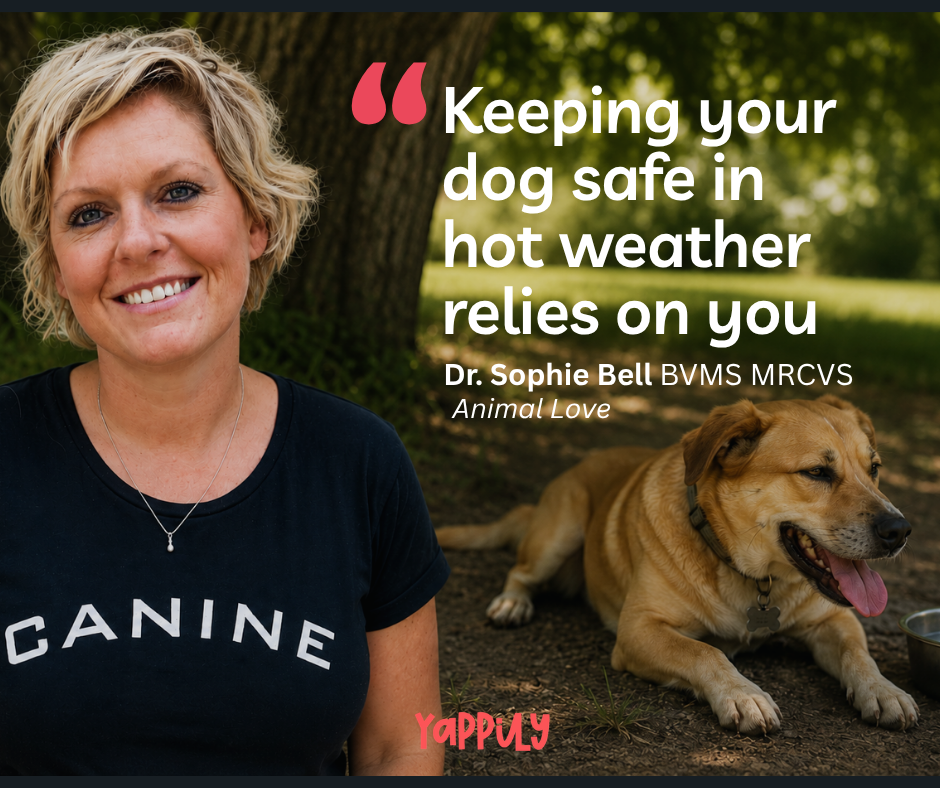
“Keeping your dog safe in the hot weather relies on you.”
High-risk dogs such as the elderly, brachycephalic breeds and those with underlying health problems need special care, and temperatures over 19°C can be extremely dangerous for them.
Make sure you provide plenty of cold water for them to drink and use cool mats and fans to keep body temperature optimal.
Signs of heat-related illness can begin subtly with heavy panting and red gums. Did you know your dog expands and looks bigger when they are hot? This helps them to cool down but also indicates to you that they are starting to struggle.
If you need to cool your dog, advice has changed.
We use cold water repeatedly on their body and never cover them with a cold wet towel. We must always actively cool our dog before travelling to the vet.
Not exposing them to high temperatures, missing a walk or two, and recognising signs of heat-related illness will ultimately keep your dog safe when temperatures soar.
Why walking can be more dangerous than many people think
When people think about dogs and hot weather, most immediately think about hot cars.
And rightly so. Leaving a dog in a vehicle on a warm day can be fatal.
However, research from the Royal Veterinary College found that exercise was responsible for around 74% of heat-related illness cases, while vehicle confinement accounted for a much smaller proportion.
The RSPCA’s Dogs Die On Hot Walks campaign highlights that dogs are significantly more likely to develop heat-related illness while exercising in warm weather than from being left in a vehicle.
Hot weather is not the time for high-energy activities
Many people assume that if a walk is short, their dog will be fine.
However, a dog’s body temperature can rise during high-intensity activities, even if they only last a short period of time.
Activities such as ball throwing, repetitive fetch games, jogging, running alongside a bicycle, chasing games, agility, Hoopers and play with other dogs can increase physical exertion and heat production.
During warm weather, additional caution may be needed when planning these activities, particularly for dogs that are at increased risk of heat-related illness.
Which dogs are most at risk?
Any dog can develop heatstroke, but some dogs are more vulnerable than others.
Particular care should be taken with brachycephalic (flat-faced) breeds such as French Bulldogs, Pugs, English Bulldogs and Boston Terriers.
These breeds often have shortened airways and narrower breathing passages, making it harder for them to cool themselves efficiently through panting. Because panting is a dog’s primary way of regulating body temperature, any restriction to airflow can significantly increase the risk of overheating.
Other higher-risk dogs include:
- Older dogs
- Overweight dogs
- Giant breeds
- Dogs with heart disease
- Dogs with breathing difficulties
- Dogs recovering from illness
- Dogs with underlying medical conditions
However, it’s important to remember that any dog can develop heatstroke under the right conditions.
Early signs of heat-related illness
One of the biggest challenges is that heat-related illness often begins subtly.
Watch out for:
- Heavy panting
- Changes in breathing or noisy breathing
- Excessive drooling
- Bright red gums or tongue
- Restlessness or agitation
- Seeking shade or water
- Tiredness or reluctance to continue walking
- Slowing down during walks
- Increased heart rate
- Vomiting or diarrhoea
- Appearing puffier or larger than usual
More serious signs of heatstroke
As heatstroke progresses, symptoms can become much more serious and require immediate veterinary attention.
These may include:
- Weakness
- Confusion or disorientation
- Staggering or difficulty walking normally
- Collapse
- Seizures
- Loss of consciousness
If you suspect heatstroke, begin cooling your dog immediately and contact your vet without delay. Current veterinary guidance is to cool first and transport second.
Cooling advice has changed
For many years, people were advised to place wet towels over an overheating dog.
Veterinary guidance has changed.
Today, experts recommend a simple message:
Cool first. Transport second.
If you suspect your dog may be suffering from heatstroke:
- Move them into a cool or shaded area.
- Pour cool or cold water over their body.
- Increase airflow using a fan or natural breeze.
- Contact your vet immediately.
- Continue cooling during transport.
Current veterinary guidance advises against covering dogs with wet towels, as they can trap heat against the body and reduce cooling efficiency.
The priority is to reduce body temperature quickly and safely.
Practical ways to keep dogs safe during hot weather
The safest approach is prevention.
These include:
- Consider walking during the cooler parts of the day, such as early morning or later in the evening, when temperatures are often lower.
- Providing constant access to fresh drinking water.
- Offering shade indoors and outdoors.
- Using fans to improve airflow.
- Closing curtains during the hottest part of the day.
- Avoiding strenuous exercise.
- Checking pavement temperatures before walking.
- Offering frozen enrichment activities.
Frequently asked questions about walking dogs in hot weather
What temperature is too hot to walk a dog?
There is no single temperature that applies to every dog. Factors such as breed, age, weight, fitness and humidity all influence risk. Dogs with underlying health conditions, older dogs and brachycephalic breeds may struggle at much lower temperatures than healthy adult dogs.
Can I walk my dog in 20°C weather?
There is no single temperature that is safe for every dog. Factors such as breed, age, body condition, fitness, humidity and underlying health conditions all influence risk.
Dr Sophie Bell notes that temperatures over 19°C can be extremely dangerous for higher-risk dogs, including elderly dogs, brachycephalic breeds and those with underlying health problems.
Can dogs get heatstroke in the shade?
Yes. Dogs can develop heat-related illness even when they are not in direct sunlight, particularly if humidity is high or airflow is poor.
How do I know if my dog is getting too hot?
Heavy panting, excessive drooling, bright red gums, slowing down during walks, seeking shade and appearing puffier than usual can all be warning signs.
Should I walk my dog during a heatwave?
Higher temperatures increase the risk of heat-related illness. Consider the conditions, your dog’s individual risk factors and the type of activity planned before exercising your dog.
What should I do if I think my dog has heatstroke?
Move your dog to a cool area, begin active cooling with cool or cold water, increase airflow and contact your vet immediately. Current veterinary guidance is to cool first and transport second.
Are cooling mats useful?
Cooling mats may be used as part of a wider hot weather management plan, alongside shade, fresh water and appropriate environmental management.
Final thoughts
Every summer, veterinary professionals, animal welfare organisations and dog professionals repeat the same message.
Heatstroke is largely preventable.
The evidence shows that ordinary walks are one of the biggest causes of heat-related illness in dogs.
As temperatures rise, dog guardians play an important role in recognising the signs of heat-related illness, adapting routines where necessary and acting quickly if a dog begins to struggle.
If you suspect heatstroke, begin cooling immediately and seek veterinary advice without delay.
Further reading and sources
This article has been written using guidance and research from recognised veterinary and animal welfare organisations. If you’d like to learn more about heatstroke in dogs and keeping dogs safe during hot weather, the following resources are worth reading.
Royal Veterinary College (RVC)
The RVC’s VetCompass programme has carried out some of the largest studies into canine heatstroke in the UK, including research showing that exercise is responsible for around three-quarters of heat-related illness cases in dogs.
The RVC also leads the “Cool First, Transport Second” campaign, which reflects current veterinary advice on treating suspected heatstroke.
RSPCA
The RSPCA’s Dogs Die On Hot Walks campaign highlights the risks associated with walking dogs during warm weather.
Expert Contribution
This article includes expert commentary from:
Dr Sophie Bell BVMS MRCVS
Animal Love
The Hot Dog Webinar
Why do dogs overheat – Busting the myths – How to recognise heat related illness – Signs and symptoms – immediate dangers – Who is at risk – When to say no as a pet owner / professional
Pet first aid isn’t just for professionals – every dog owner should know how to handle emergencies. Dr. Sophie Bell joins us to share life-saving tips and expert advice on our podcast with Nathan Dunleavy, on The Yappy Hour!
If you suspect your dog may be suffering from heatstroke, seek veterinary advice immediately. Heatstroke is a veterinary emergency.
Need A Vet ? Search on the Yappily Directory For Vet Near you
Add a comment