

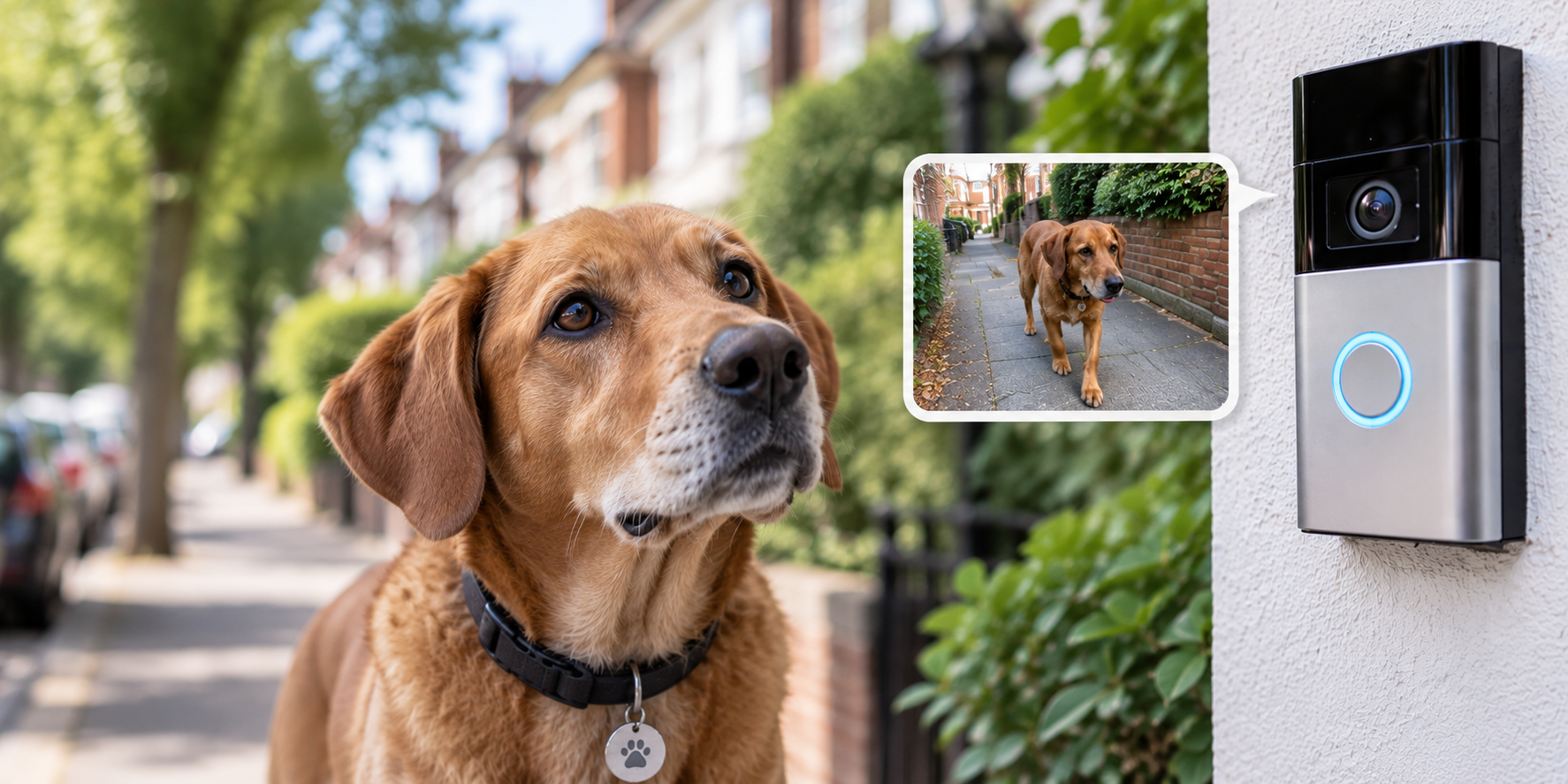
Ring is bringing its Search Party for Dogs service to the UK, giving dog guardians a new way to call on nearby doorbell and security cameras when a pet goes missing.
The feature will arrive as part of Ring Neighbours, which is due to launch in the UK on 21 October 2026.
For dog parents, Search Party is arguably the most interesting part of the new service.
When a dog is reported missing, participating outdoor Ring cameras in the area can look for dogs resembling the one in the missing-pet report. If a possible match is spotted, the person whose camera captured it receives an alert and can check the footage.
They can then decide whether to share the relevant clip and location with the dog’s owner.
That could provide something particularly valuable during a missing-dog search: a clue about where the dog was and which direction they were heading.
How Search Party works
Owners can create a Pet Profile in the Ring app containing photographs and details about their dog.
If the dog goes missing, they can create a Lost Pet Post and start a Search Party.
Nearby participating outdoor Ring cameras can then check captured footage for possible matches. When one is identified, the camera owner is shown the missing dog’s photograph alongside the relevant footage.
It is still up to that person to decide whether it really looks like the missing dog and whether to share the sighting.
So this isn’t a system that automatically sends strangers footage from somebody’s doorbell camera.
The person who owns the camera remains in control of what they share.
You don’t need to own a Ring doorbell to join Neighbours
One potentially useful aspect of the UK service is that Neighbours will be free to use and isn’t restricted to Ring camera owners.
That means someone whose dog has disappeared will not necessarily need to own a Ring doorbell themselves to use the community service.
The cameras doing the searching, however, need to be compatible participating Ring cameras.
It effectively adds another tool to the familiar missing-dog search: alongside neighbours looking out of their windows and people checking their own CCTV or doorbell recordings, participating cameras can flag footage that may be worth a closer look.
Could it help find a missing dog?
Ring says Search Party is already helping reunite more than one lost dog a day with their families where the service is operating.
That figure comes from Ring rather than an independent UK study, and the British rollout has yet to begin, so we’ll have to see how useful it proves here.
There are obvious situations where it could help.
A dog that bolts can cover a surprising distance, and owners searching nearby may simply be looking in the wrong place. A camera sighting several streets away could help redirect a search.
It could be particularly useful when there are several sightings. Knowing that a dog appeared on one camera and subsequently another could begin to show the direction in which they are travelling.
But it won’t replace the established things owners should do when a dog disappears, including checking microchip details, contacting local vets and the dog warden and alerting missing-dog organisations and local communities.
Think of Search Party as another source of sightings rather than a replacement for a conventional missing-dog search.
What about privacy?
This will inevitably be one of the questions surrounding the service.
Ring says footage isn’t automatically handed to the owner of the missing dog.
Instead, if a participating camera identifies a possible match, its owner receives the notification first. They can ignore it, share the relevant footage and location or contact the dog’s owner.
Ring says users remain in control of whether their video is shared.
The wider Neighbours service has attracted privacy debate in the United States, particularly around the relationship between privately owned cameras and public authorities.
The UK version will initially launch without some of the US public-safety features, including the facility through which authorities can make requests for footage.
For most dog owners, however, the immediate question will be much simpler: could the camera three doors down have seen where their missing dog went?
From 21 October, there may be a new way of finding out.
Search Party for Dogs: your questions answered
When does Ring Search Party for Dogs launch in the UK?
Ring Neighbours is due to become available in the UK from 21 October 2026, with Search Party for Dogs included as part of the service.
Do I need a Ring doorbell to report my dog missing?
No. Ring says Neighbours can be used without owning a Ring device or having a Ring subscription.
Does my neighbour need a Ring camera?
For a camera to participate in the automated Search Party search, it needs to be a compatible outdoor Ring camera taking part in the service.
People without Ring cameras can still be part of the wider Neighbours community.
What happens when a camera spots my dog?
The system flags a possible match to the camera owner.
They can compare their footage with the photograph of the missing dog. If they think it could be the right dog, they can choose to share the relevant footage and location or contact the dog’s owner.
Will I be able to see my neighbours’ Ring cameras?
No. Starting a Search Party doesn’t give you access to other people’s cameras or recordings.
The camera owner chooses whether to share footage relating to a possible sighting.
Does Search Party definitely know that it has found my dog?
No. It identifies possible matches.
A sighting therefore needs to be treated as a lead rather than confirmation that the dog in the footage is definitely yours.
What should I put on my dog’s Pet Profile?
Ring allows owners to add photographs and information including their dog’s breed, sex, weight and other details.
Clear, recent photographs should make the missing-dog post more useful to people trying to identify them.
What is a Ring Pet Tag?
Ring also offers a QR-code Pet Tag that can be attached to a dog’s collar and linked to its Pet Profile.
If someone finds the dog, they can scan the tag with their phone and contact the owner. The finder doesn’t need the Ring app to scan it.
Ring says the owner’s name and telephone number aren’t displayed to the finder through its contact system.
Does Search Party replace microchipping?
No.
Microchipping and Search Party perform very different jobs. A microchip can help identify a dog after they have been found and scanned. Search Party is intended to help generate sightings while people are still looking for them.
UK dog owners should continue to make sure their dog’s microchip details are correct and up to date.
What should I do if my dog goes missing before 21 October?
Don’t wait for Search Party.
Contact your local dog warden, nearby vets and rescue organisations, check that the contact information registered against your dog’s microchip is correct and alert reputable missing-dog networks and local communities.
Ask neighbours with CCTV or video doorbells to check their recordings too. A sighting and an accurate time can be extremely useful in establishing which direction a missing dog has travelled.
Is Search Party already available in Britain?
Not officially according to the announced timetable.
There is currently some confusing information on Ring’s UK website. Its UK pages already explain Search Party and how to use it, while another section still states that Neighbours is only available in the United States.
The announced UK launch date is 21 October 2026, so UK dog owners should not assume the service is available in their area before then.
Yappily Newsdesk will be watching the UK rollout and, most importantly, whether Search Party starts helping reunite missing British dogs with their families.
Looking for trusted dog care?
From dog walkers and groomers to trainers, behaviourists, daycare and boarding, find dog professionals who put welfare first on Yappily.
Are you a dog professional?
Do you provide kind, welfare-led services for dogs? Join Yappily’s growing directory of dog professionals, showcase your services and help more dog guardians find your business.
Add a comment