

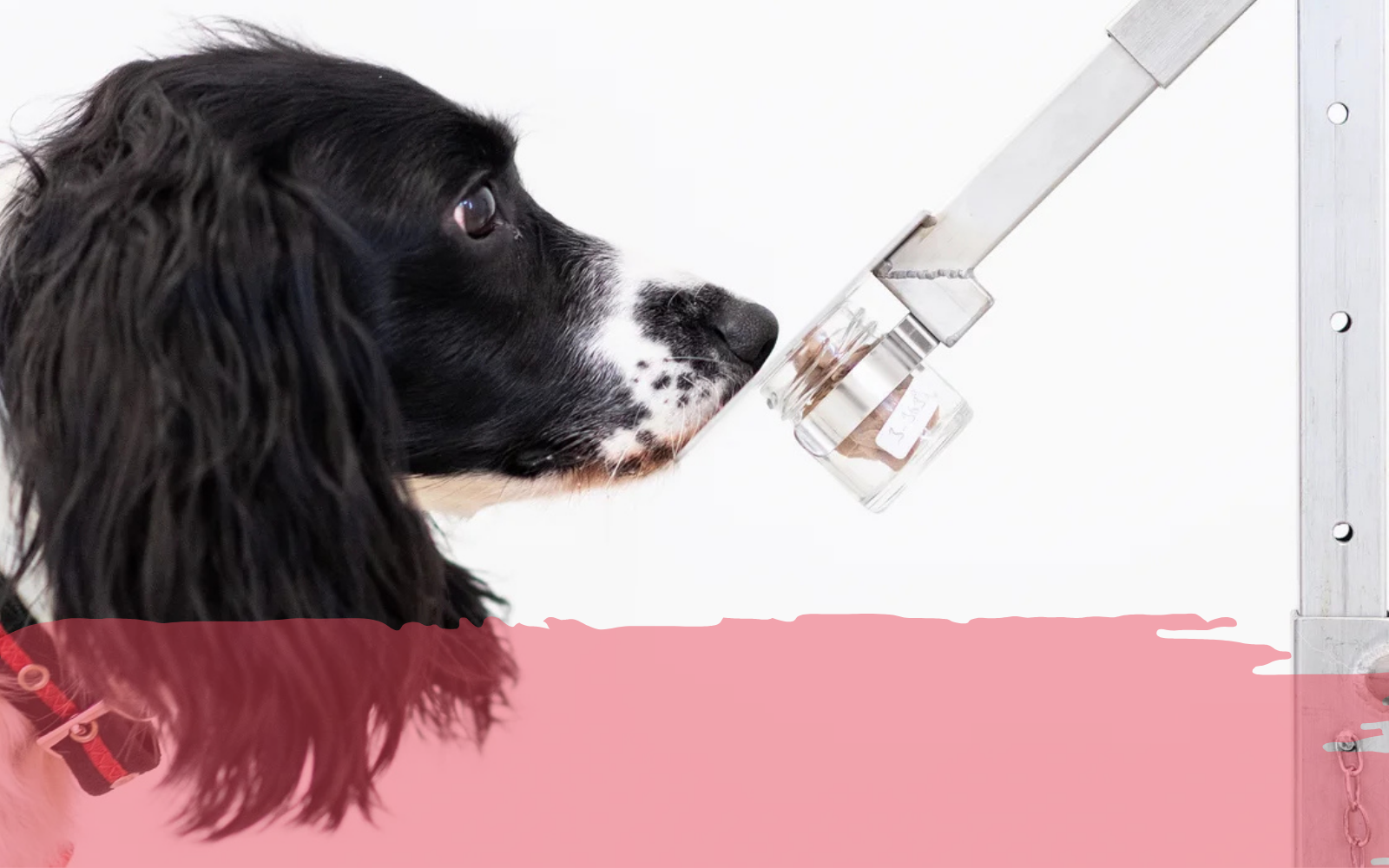
Key Points
- Trained dogs identified multiple cancers from breath samples in a large study
- Accuracy was reported above 90% under controlled conditions
- The research involved more than 1,500 participants
- Findings highlight potential for low-cost, non-invasive screening support
A new study has found that trained dogs may be able to identify several types of cancer by smelling breath samples. The research looked at whether dogs could help spot signs of disease in a simple, non-invasive way.
The work was carried out by Medical Detection Dogs in collaboration with Dognosis, and the results have been published in the Journal of Clinical Oncology.
What the study looked at
The study took place across six hospitals in India and included 1,502 people.
Out of these:
- 283 had confirmed cancer
- 1,219 did not have cancer, including people with other conditions
Participants wore surgical face masks, which were then used to collect breath samples. These were presented to a team of seven trained dogs.
The dogs were trained to identify odours linked to a range of cancers, including breast, lung, gastrointestinal and gynaecological cancers.
What researchers found
The dogs were able to correctly identify cancer samples with reported accuracy above 90% in the study conditions.
To support the results, researchers combined the dogs’ responses with statistical modelling to improve consistency and reduce variation.
They also recorded factors such as smoking, food intake and time of day to understand how these might affect results.
What This Means for Dog Guardians
This study shows how sensitive a dog’s sense of smell can be, particularly when trained for detection work.
It does not mean dogs are being used to diagnose cancer in everyday healthcare. The research is still at a development stage and was carried out in controlled conditions.
However, it does highlight how dogs are being used in specialist roles beyond companionship, including medical and detection work.
Why is this research being carried out
The research aims to explore simpler ways of identifying disease, especially in areas where access to testing is limited.
Breath sampling and canine detection are both non-invasive, and researchers are looking at whether they could support early screening in the future.
FAQs
Can dogs diagnose cancer?
No. This study shows detection ability under test conditions, not clinical diagnosis.
How accurate were the dogs?
The study reported accuracy above 90% in the controlled setting.
What types of cancer were included?
Several types, including breast, lung, gastrointestinal and gynaecological cancer
Where was the study carried out?
Across six hospitals in India.
Where this information comes from
Canine Olfaction Combined With Bayesian Modelling for Multicancer Detection From Breath Samples: A Phase II Study in India
Published in the Journal of Clinical Oncology
DOI: Study
Add a comment